

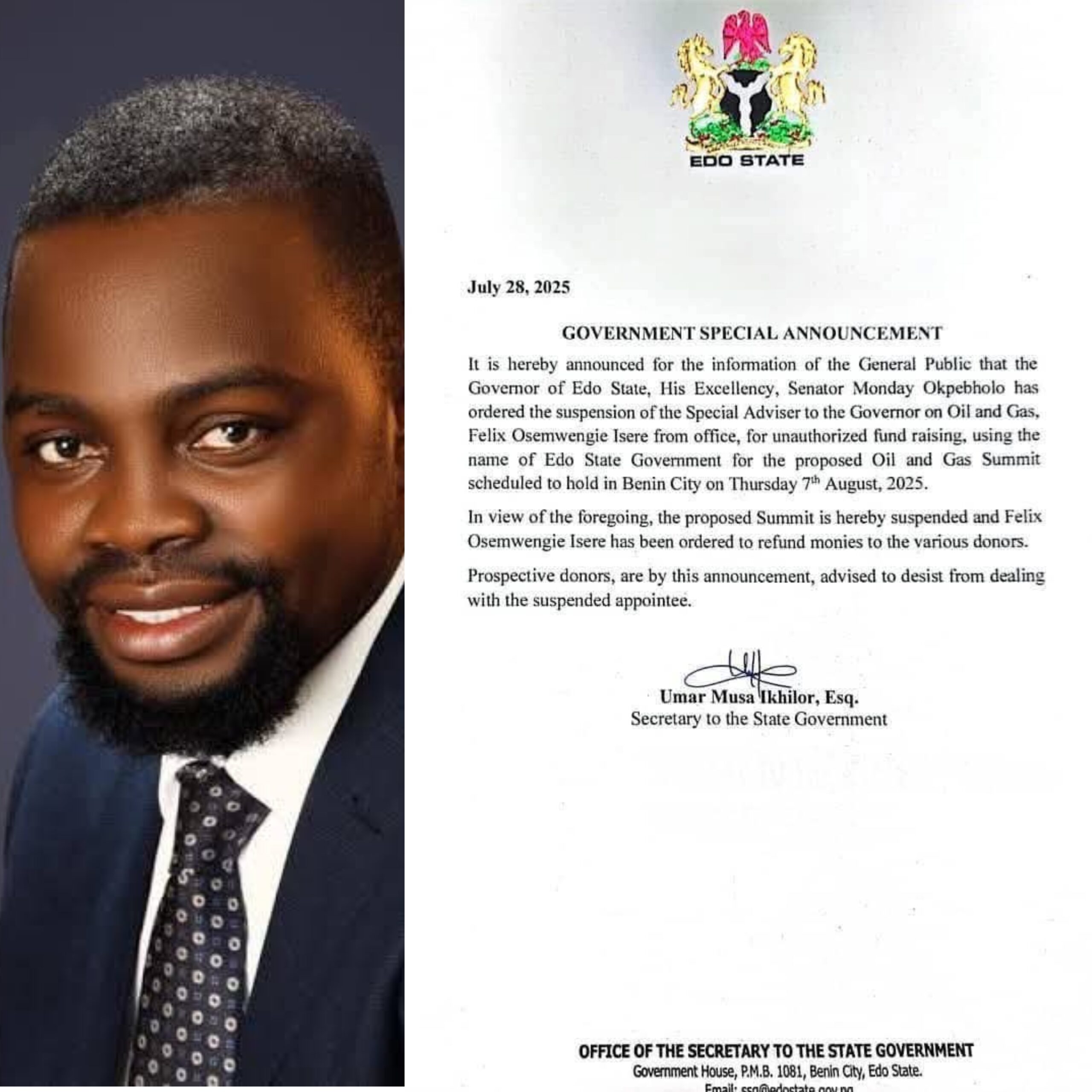
Edo State is reeling from the bombshell announcement: Senator Monday Okpebholo has suspended his Special Adviser on Oil and Gas, Felix Osemwengie Isere, over explosive allegations of unauthorised fundraising and financial misconduct linked to a high-profile oil and gas summit. The move, announced Tuesday by the Secretary to the State Government, Umar Ikhilor, paints a damning picture of selfish ambition and unchecked greed at the very heart of the administration.
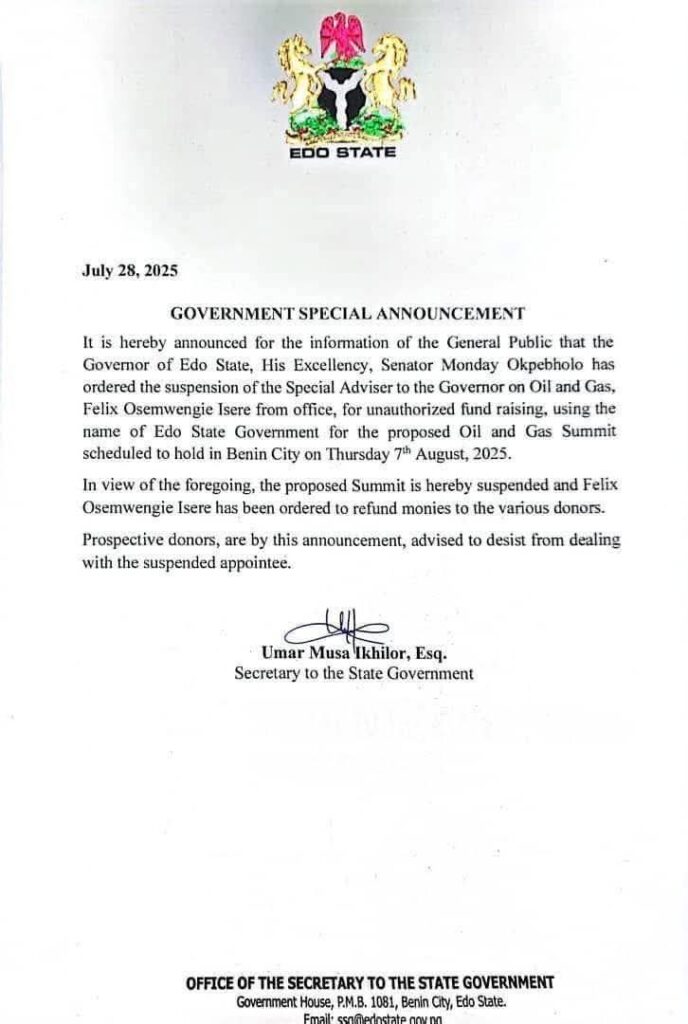
At the centre of the scandal is Isere’s covert fundraising for a proposed Oil and Gas Summit, originally set for August 7, 2025. Shockingly, it is alleged that Isere used the name of the Edo State Government to solicit vast sums from donors for an event that had not received the full, documented backing of the Governor or his Executive Council. Reports indicate that many political appointees and even senior commissioners were blindsided by billboards and aggressive publicity for the summit—none of which had been properly vetted, discussed, or approved at the highest levels of government.
Isere is now under direct orders from the Governor to refund all monies collected, but the state government has refused to disclose the total sum illicitly amassed before the house of cards collapsed. Prospective donors have been sternly warned to cease all dealings with the disgraced aide, and the event has been scrapped in its entirety.
Insiders allege that Isere’s manoeuvres were not just a breach of protocol, but a textbook case of selfish political opportunism. Anonymous sources from within the administration described how Isere bypassed crucial consultations and sought donations from stakeholders—hoping to create a parallel power base and perhaps curry personal favour or financial gain. Some go further, asserting that Isere acted under the delusion he was untouchable, shielded by political godfathers immune to discipline or accountability.
One senior government official, speaking on condition of anonymity, summarized the mood:
“The whole episode is an act of unbridled greed. Organising such a major summit, collecting funds, and splashing publicity everywhere without proper due process is the height of selfishness. This was about personal enrichment, not service to Edo people.”
Another layer of controversy is that Isere did receive initial approval for the summit, but repeatedly failed to consult or brief the governor’s closest advisers—suggesting a deliberate effort to circumvent scrutiny and accountability. Commissioners professed complete ignorance of the summit finances, while one admitted hearing rumours only when news of payments leaked, underlining a culture of secrecy and self-serving ambition.
The uproar has triggered a wider conversation about the rot of entitlement and greed festering within the corridors of power. Critics say this scandal is emblematic of a deeper malaise: officials who see their offices as platforms for personal gain, not public stewardship. Calls are mounting for a broader housecleaning. Legal experts are even urging the governor to school his appointees on “transparency and ethics“ so that Edo never again becomes a playground for political jobbers armed with unchecked power”.
Felix Isere’s suspension is not just an isolated incident—it is an ugly manifestation of rampant selfishness and greed that threaten to undermine public trust and the basic fabric of governance in Edo State. The accusations—unauthorised fundraising, deliberate concealment, disregard for public process—point squarely at an official driven by personal interest over public good. If Edo is to rebuild trust, nothing less than total transparency and zero tolerance for such excesses will suffice.
